
Siberian Husky Lifespan: How Long Do Huskies Live?
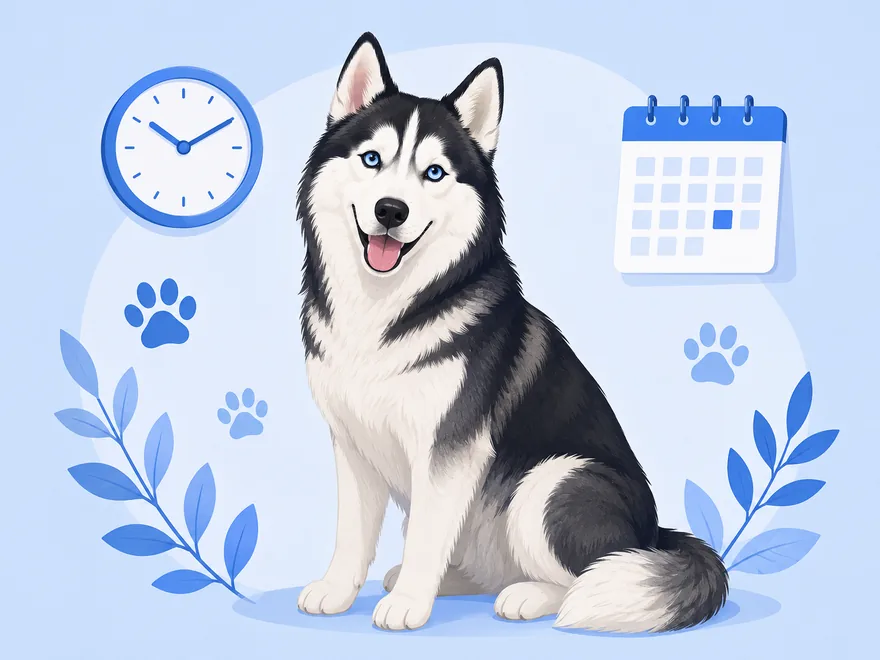
Siberian Huskies live 12 to 14 years on average, longer than many medium-size breeds thanks to their lack of extreme physical features. A healthy weight, dental care, eye screening, and regular veterinary visits help a Husky reach the top of that range.
How long do Siberian Huskies live?
Siberian Huskies live 12 to 14 years on average. As a medium-size breed without extreme conformation, they often sit at the longer-lived end for dogs their size. Medium dogs average 10 to 14 years, and the Husky lands at the top of that band.
Part of the reason is their moderate, working-dog build: no flat face and no extreme size means fewer structural problems than many breeds. Across dogs, size is the biggest predictor of how long a dog lives, and the Husky's medium size is part of why it does relatively well. See our guide to dog lifespan by breed and size, or use the dog age calculator on the medium setting.
What affects a Siberian Husky's lifespan?
Genetics, body weight, dental and veterinary care, and parasite prevention are the biggest levers. The owner-controlled factors matter as much as the breed itself.
- Body weight. Keeping a Husky lean is linked to roughly two extra years of life. Under-exercised, overweight Huskies face more joint and metabolic problems.
- Genetics and responsible breeding. Parents screened for hips and eyes produce healthier litters.
- Daily exercise. Huskies are high-energy working dogs built to run, and activity supports both weight and joints.
- The everyday levers: dental care, parasite prevention, and routine vet visits.
Common health issues in Siberian Huskies
The breed's signature health risks are inherited eye disorders. Hip dysplasia exists but is uncommon in Huskies, and zinc-responsive skin disease is a breed-specific quirk.
- Eye disorders, the breed's headline concern: juvenile cataracts, corneal dystrophy, glaucoma, and progressive retinal atrophy. The breed club requires yearly eye exams for breeding dogs because of this.
- Hip dysplasia, notably low in this breed. Only about 2 percent of evaluated Huskies were affected, ranking the breed near the bottom for hip dysplasia risk.
- Zinc-responsive dermatosis, an Arctic-breed quirk where the dog cannot absorb enough dietary zinc. It causes crusting around the eyes and muzzle and is managed with veterinary zinc supplementation.
- Hypothyroidism, an underactive thyroid that is manageable with daily medication.
Huskies are otherwise a generally healthy breed. The eye conditions are the standout, not a long list of fatal diseases.
How to help your Siberian Husky live longer
Keep your Husky lean, exercised, and screened. Weight control, dental care, eye exams, and steady veterinary visits are what extend a Husky's life.
- Keep the dog lean, the biggest owner-controlled lever, worth about two years.
- Provide plenty of daily exercise. Huskies are built to run, and activity supports weight and joints.
- Schedule annual eye exams given the breed's inherited eye risks, and ask your breeder for proof of parental hip and eye clearances.
- Keep up dental care, year-round parasite prevention, and regular wellness visits.
- Feed a complete, balanced diet, and raise any crusting around the face with your vet early, since it can signal zinc-responsive dermatosis.
Senior and aging signs in Siberian Huskies
A Siberian Husky is considered senior around age 10 and geriatric around 13. Watch for slowing down, cloudier eyes, and changes in habits as early aging signs.
- Reduced stamina and reluctance to run, stiffness, a graying muzzle, and cloudier eyes, which the breed's cataract risk can compound.
- Weight shifts as metabolism slows. Maintenance calorie needs drop 10 to 20 percent.
- Cognitive changes such as disorientation and altered sleep, which become more common with age.
Senior wellness panels catch age-related disease earlier. The senior check walks through the signs by age.
See your Siberian Husky's age in human years →Frequently asked questions
How long do Siberian Huskies live?
On average, 12 to 14 years. As a medium-size breed without extreme physical features, Huskies often live toward the longer end for dogs their size.
What is the oldest a Husky can live?
While 12 to 14 years is the average, well-cared-for Huskies kept lean and healthy can reach 15 or occasionally older. Genetics, weight, and veterinary care all affect where an individual lands.
Do Siberian Huskies have a lot of health problems?
No, they are a generally healthy breed. Their main inherited risks are eye disorders such as cataracts, corneal dystrophy, glaucoma, and progressive retinal atrophy. Hip dysplasia is uncommon in the breed compared with many others.
What do Siberian Huskies usually die of?
There is no single dominant cause. Like most dogs, older Huskies face age-related cancers and organ decline. The breed has no defining fatal heart or bone cancer the way some breeds do.
At what age is a Husky considered a senior?
Around 10 years old, with geriatric status around 13, the standard thresholds for a medium-size dog. Senior care and wellness screening become more important from about age 10.
Are male or female Huskies longer-lived?
There is no strong, consistent lifespan difference by sex in Siberian Huskies. Weight management, genetics, and veterinary care matter far more than whether the dog is male or female.
How can I help my Husky live longer?
Keep it lean (worth roughly two extra years), exercise it daily, schedule annual eye exams, stay current on dental care and parasite prevention, and keep regular vet visits.
Do Huskies live longer than other dogs their size?
Often, yes. They tend to sit at the top of the 10 to 14 year range typical for medium dogs, helped by their moderate, working-dog build and lack of extreme conformation.
Sources
- Teng KT, et al. “Life tables of annual life expectancy and mortality for companion dogs in the United Kingdom.” Scientific Reports, 2022.
- Siberian Husky Club of America. Hip Screening and Health Testing Information.
- American Kennel Club. Siberian Husky Breed Standard and Breed Information.
Written by the Dogs Age Calculator editorial team · How we research & fact-check